
 734.506.6300
Forecasting mortgage rates requires analyzing a complex mix of economic indicators. In Q1 2026, we are seeing the lagging effects of Federal Reserve policies implemented over the last 24 months. The consensus among financial experts suggests a stabilization period, yet volatility remains a factor based on inflation reports and employment data. For buyers in Woodhaven, this means that while we may not see the historic lows of the early 2020s, we are also moving away from the extreme volatility that characterized the post-pandemic correction.
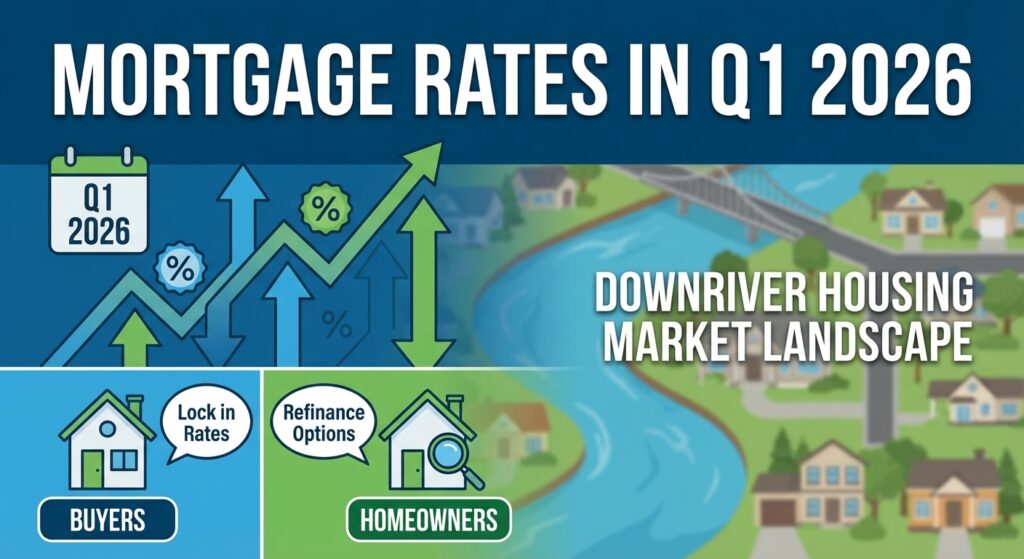
Key factors influencing your rate today include:
- Inflationary Pressure: As inflation stabilizes, lenders are often able to offer more competitive pricing.
- The 10-Year Treasury Yield: Mortgage rates tend to track the 10-year Treasury note. Watching this yield provides a good day-to-day indicator of rate movement.
- Loan-Level Price Adjustments (LLPAs): Your credit score and down payment size have a massive impact on the final rate offered.
For those looking to buy, “timing the market” is often a risky strategy. Instead, focusing on affordability is key. A slight dip in rates can significantly increase your purchasing power, allowing you to afford a larger home in desired neighborhoods or simply reduce your monthly obligation. Conversely, waiting for a “perfect” rate that may never arrive could result in missing out on home appreciation. It is vital to consult with a lender who understands the local Downriver market to run real-time scenarios.
| Loan Scenario (30-Year Fixed) | Interest Rate | Monthly Principal & Interest | Total Interest Paid (5 Years) |
|---|---|---|---|
| $300,000 Loan Amount | 5.50% | $1,703 | $80,600 |
| $300,000 Loan Amount | 6.00% | $1,799 | $88,300 |
| $300,000 Loan Amount | 6.50% | $1,896 | $96,100 |
| $300,000 Loan Amount | 7.00% | $1,996 | $103,900 |
Strategic Advice for Buyers and Homeowners in 2026
Given the data for Q1 2026, the best strategy is preparation and agility. For homebuyers, getting pre-approved is non-negotiable. In a competitive market like Woodhaven, sellers need assurance that your financing is solid. A pre-approval from a reputable local lender like Mortgage 1 carries more weight than a generic letter from a big-box internet bank. It signals that a professional has vetted your income and assets.
For homeowners, this quarter is an excellent time to conduct a mortgage check-up. Even if rates haven’t dropped enough to justify a full rate-and-term refinance, you might consider a cash-out refinance to consolidate higher-interest debt or fund home improvements. With home values in Michigan holding steady or rising, you likely have equity that can be put to work.
Actionable Tips for Success:
- Boost Your Credit: Even a 20-point increase can move you into a better pricing bracket.
- Lock vs. Float: Discuss with Joseph Migliaccio whether you should lock your rate immediately upon contract or float it in hopes of a dip. This decision depends heavily on short-term market forecasts.
- Explore Programs: Don’t assume a 30-year fixed is your only option. ARMs (Adjustable Rate Mortgages) or 15-year terms might offer lower rates if they align with your long-term plans.
Compliance Note: Mortgage 1 Downriver is an Equal Housing Lender. Rates and programs are subject to change without notice and are dependent on credit qualifications. NMLS #129386.
Q1: Are mortgage rates expected to drop significantly in the remainder of 2026?
While no one has a crystal ball, most economic forecasts for 2026 suggest a stabilization or gradual decline rather than a sharp drop. It is safer to budget based on current rates and refinance later if the market improves significantly.
Q2: How does the local Woodhaven market affect my interest rate?
While base interest rates are determined nationally, local lenders often have access to specific state bond programs (like MSHDA in Michigan) or local grants that can effectively lower your costs or provide down payment assistance.
Q3: Should I wait for rates to go down before buying a home?
Waiting can be costly. If rates drop, home prices often rise due to increased demand. It is often better to buy the house you love when you can afford the payment, and refinance the rate later if it drops.
Q4: What is the difference between an interest rate and APR?
The interest rate is the cost of borrowing the principal loan amount. The APR (Annual Percentage Rate) includes the interest rate plus other costs like broker fees, discount points, and some closing costs, giving you a truer picture of the loan’s cost.
Q5: How do I contact Joseph Migliaccio for a consultation?
You can reach Joseph directly at 734-341-4322 or via email at jmigliaccio@mortgageone.com to discuss your specific scenario and get a custom quote.
Get Your Custom Rate Quote Today